Embassy of Pakistan
Moscow - Russia
Moscow - Russia
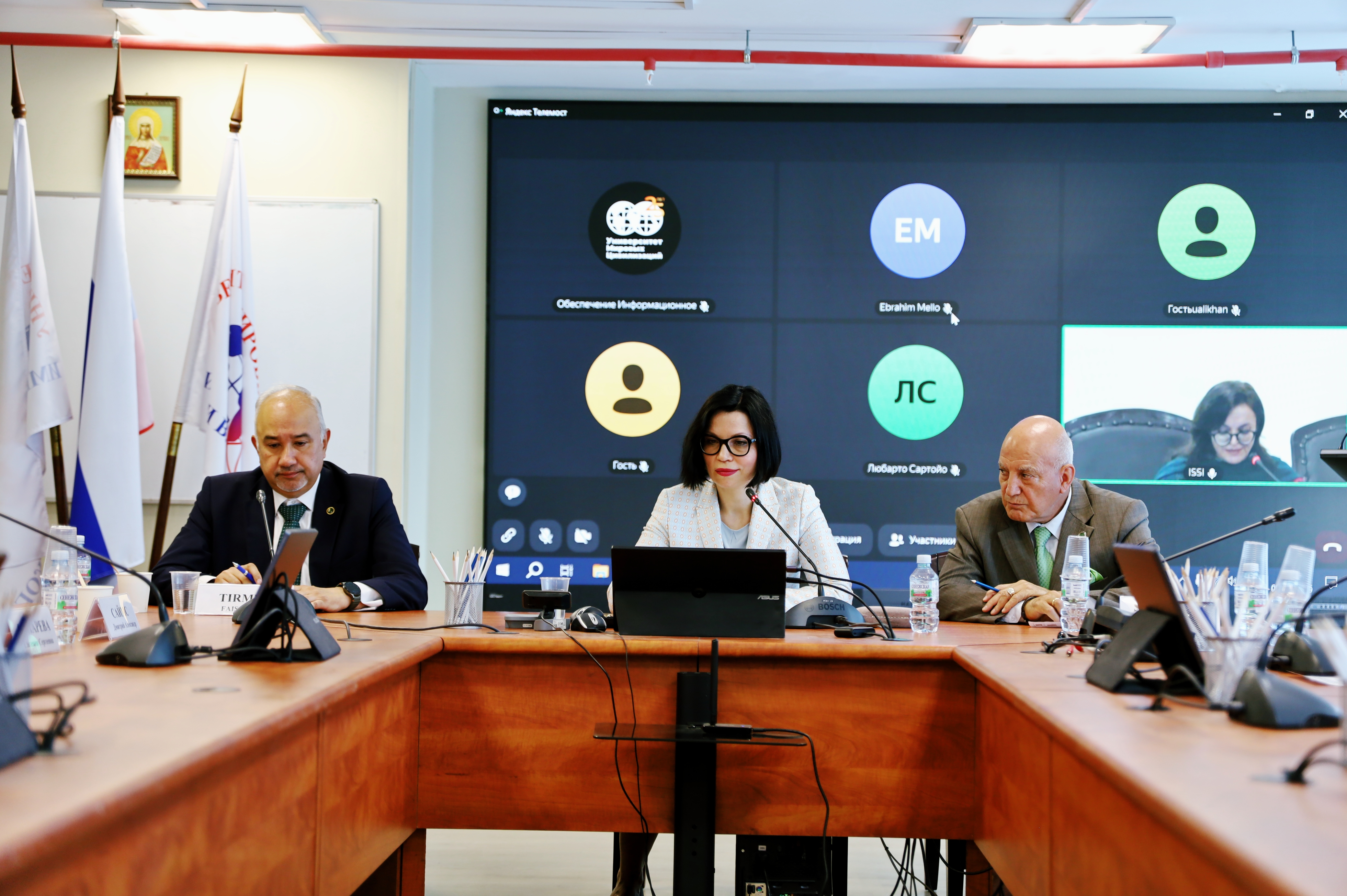
Scholars, diplomats, policymakers, journalists and strategic experts from Moscow and Islamabad convened at the International Webinar on "Pakistan–Russia Bilateral Relations at the Cusp of a Shifting Global Order", hosted by the University of World Civilizations, Moscow, in collaboration with the Institute of Strategic Studies Islamabad (ISSI). The event provided a platform to examine the evolving dynamics of Pakistan–Russia relations amidst significant transformations in the global, political and economic landscape.
Chief Guest was Sardar Awais Ahmed Khan Leghari, Federal Minister for Energy & focal person for Russia/Pakistan. Participants from Pakistan included Ambassador Masood Khan, Ambassador/Special Assistant to the Prime Minister,Tariq Fatemi, Ambassador Jauhar Saleem, renowned journalist, Talat Hussain.
From Russia, Dimitri Alexender, Director of Sputnik International Russia Today, Dr. Natalia Zamaraeva, Senior Research fellow at the Institute of Oriental Studies of the Russian Academy of Sciences. Dr. Roksolana Yurievna Zhigon, PhD, Director of the Scientific Center "Diplomacy of Peoples, Partnership of Civilizations", UMC Center for Youth Public Diplomacy (organizer of the webinar) participated.
The webinar highlighted the growing importance of Pakistan–Russia engagement as both countries seek to navigate an increasingly multipolar international order. Participants emphasized the expanding scope of cooperation in areas including trade, regional connectivity, counter-terrorism, education, and people-to-people exchanges. Over the past decade, Pakistan and Russia have witnessed progression in their engagement, towards a pragmatic partnership.
Addressing the webinar, H.E. Mr. Faisal Niaz Tirmizi, Ambassador of Pakistan to the Russian Federation stated:
"Pakistan after 47 years has brought USA and Iran to the negotiating table. This makes Pakistan geographically and diplomatically crucial to world peace. Pakistan and Russia today find themselves presented with a historic opportunity to elevate their engagement beyond traditional diplomacy. As the world transitions towards a more multipolar order, our two countries possess the strategic vision, economic leverage, and political will necessary to build a partnership that contributes positively to regional stability. The future of Pakistan–Russia relations will be defined not by the constraints of the past, but by the opportunities we create together for our future generation."
Ambassador Tirmizi further emphasized that cooperation in security, regional connectivity, trade facilitation, technological innovation, and educational exchanges could serve as key pillars of a more resilient bilateral relationship. He reiterated that areas that shall bring dividends to both sides shall be cooperation in road, rail and air connectivity.
Participants at the webinar also discussed the prospects for enhanced economic cooperation and the importance of leveraging Pakistan's geo-strategic location as a bridge between South Asia, Central Asia, and the broader Eurasian region. The discussion underscored the shared interest of both countries in promoting regional stability, economic development, and constructive international engagement.
Participants from the Russian side emphasized the visit of Prime Minister of Pakistan to Russia as the most awaited event and crucial to bilateral relations. They stated that as the global order continues to evolve, Pakistan and Russia are well-positioned to expand their partnership in ways that contribute to regional peace, economic prosperity, and international cooperation. The webinar concluded with a shared recognition that stronger bilateral ties can serve as a stabilizing force in an increasingly complex international setting.
The webinar ended with a vote of thanks stating that the collaboration between the University of World Civilizations and the Institute of Strategic Studies Islamabad reflects a shared commitment to strengthening intellectual and strategic engagement between the two countries.
Moscow, June 09, 2026
46
 Search


 Print
Print