Embassy of Pakistan
Tokyo-Japan
Tokyo-Japan
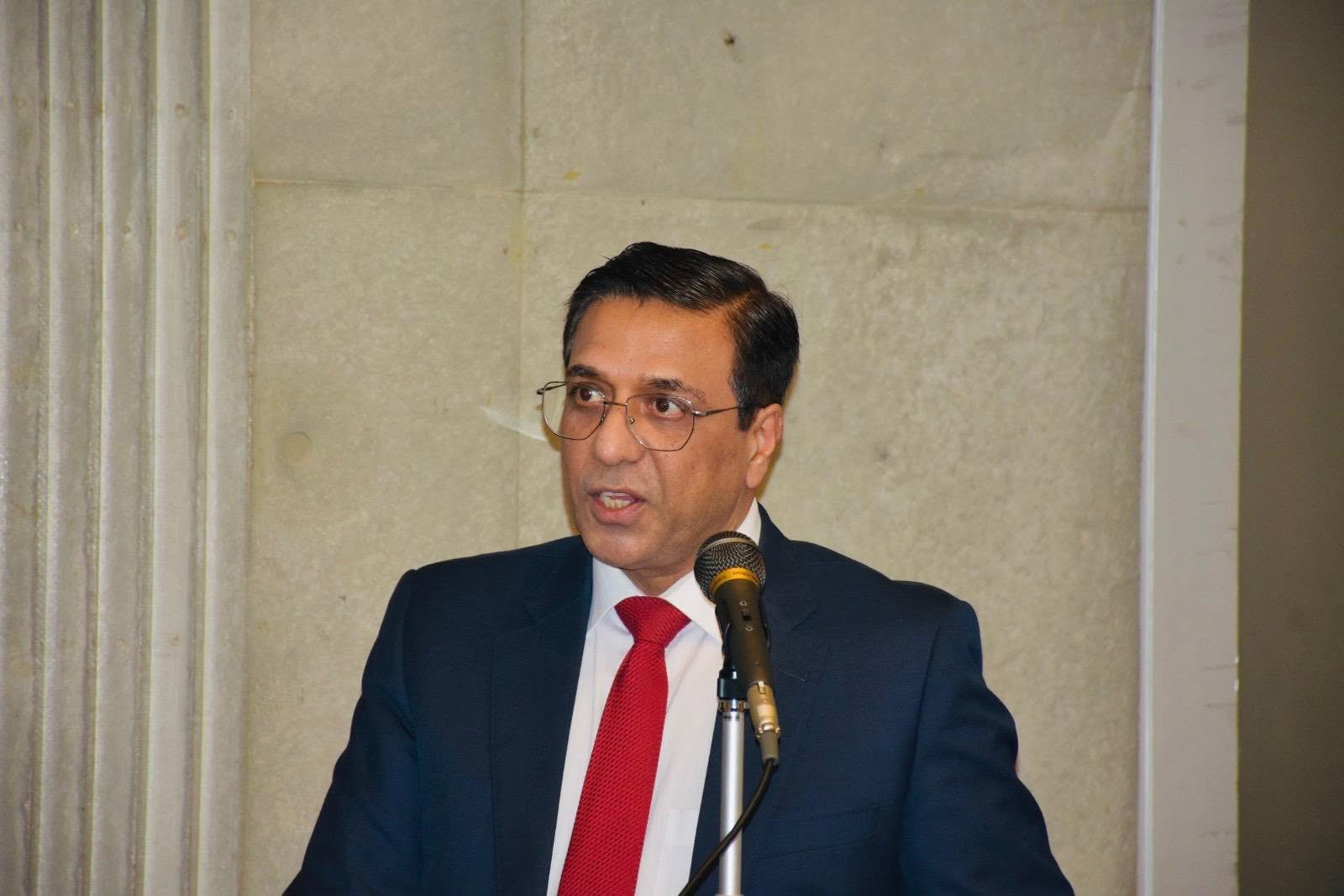
(Tokyo, 28 June 2026: The Embassy of Pakistan in Tokyo hosted the First Pakistan–Japan Symposium on Science, Technology and Innovation on Sunday, 28 June, bringing together leading Pakistani researchers, scientists and technology professionals based in Japan with representatives from academia, and industry.
The symposium, held under the theme “Building Bridges Between Japanese Cutting-Edge Technologies and Pakistani Researchers, Scientists and Entrepreneurs,” reflected the growing importance of science diplomacy in advancing bilateral relations. As technological competition increasingly shapes global economic development, the event highlighted the complementary strengths of Japan’s innovation ecosystem and Pakistan’s expanding pool of scientific talent, young researchers and entrepreneurial capacity.
Delivering the opening remarks, Mr. Abdul Hameed, Ambassador of Pakistan to Japan, emphasized that scientific cooperation has become one of the most dynamic pillars of contemporary international relations. He observed that while Pakistan and Japan have enjoyed over seven decades of close friendship, future cooperation must increasingly be driven by knowledge, innovation, advanced manufacturing, artificial intelligence and research collaboration.
The Ambassador noted that Japan’s global leadership in robotics, biotechnology, advanced materials and precision manufacturing offers immense opportunities for mutually beneficial partnerships with Pakistan’s universities, research institutions and emerging technology enterprises. He stressed that stronger academic linkages, joint research projects and industrial partnerships would contribute positively to bilateral relations.
The symposium featured presentations covering a broad spectrum of technologies.The keynote address was delivered by Dr. M. Ajmal Khan Wazir, who presented his pioneering work on photonic technologies. He demonstrated how breakthroughs in photovoltaic materials, and ultraviolet LED technologies can contribute to renewable energy, medical science, water purification, public health and climate resilience. He highlighted the considerable potential for adapting these Japanese technologies to Pakistan’s development priorities, particularly in energy security, healthcare, agriculture and environmental sustainability.
Dr. Khurram Bashir’s presentation illustrated how advances in plant science and chemical biology can strengthen food security, improve agricultural sustainability and address micronutrient deficiencies affecting millions of people worldwide. In the field of renewable energy, Dr. Sana Ullah outlined how Pakistan’s abundant solar resources, combined with Japanese expertise in advanced materials and catalysis, could provide a foundation for future bilateral cooperation in clean hydrogen technologies and sustainable energy systems.
The symposium also examined the digital transformation of telecommunications. Dr. Ahsan Sohail presented a case study of software-defined and AI-enabled telecommunications infrastructure. His presentation highlighted the relevance of new technologies for Pakistan’s evolving telecommunications sector and future 5G deployment.
Artificial intelligence featured prominently in the second session. Dr. Iffat Maab outlined a collaborative framework for developing Urdu language technologies through data based research. She highlighted the importance of creating high-quality linguistic datasets, large language models and multilingual AI systems capable of supporting education, healthcare, agriculture and scientific communication. Mr. Haris Gulzar’s presentation illustrated how advances in voice-based artificial intelligence may transform future digital services across multiple sectors.
Throughout the symposium, participants engaged in lively discussions on technology commercialization, university–industry partnerships, startup ecosystems, research funding, talent mobility and opportunities for collaborative innovation. The exchanges underscored the growing role of the scientific community as a valuable bridge connecting the research ecosystems of the two countries.
In his closing remarks, Ambassador Abdul Hameed thanked the distinguished speakers, participants and organizing team for making the inaugural symposium a success.
The programme concluded with a networking dinner and follow-up discussions, providing participants with an opportunity to explore future collaborative projects and deepen professional connections. The Embassy reaffirmed its commitment to facilitating partnerships that promote innovation, technological advancement and sustainable economic development for the mutual benefit of Pakistan and Japan.
 Search


 Print
Print