Embassy & Permanent Mission of Pakistan to the United Nations & Other International Organizations
Vienna - Austria
Vienna - Austria
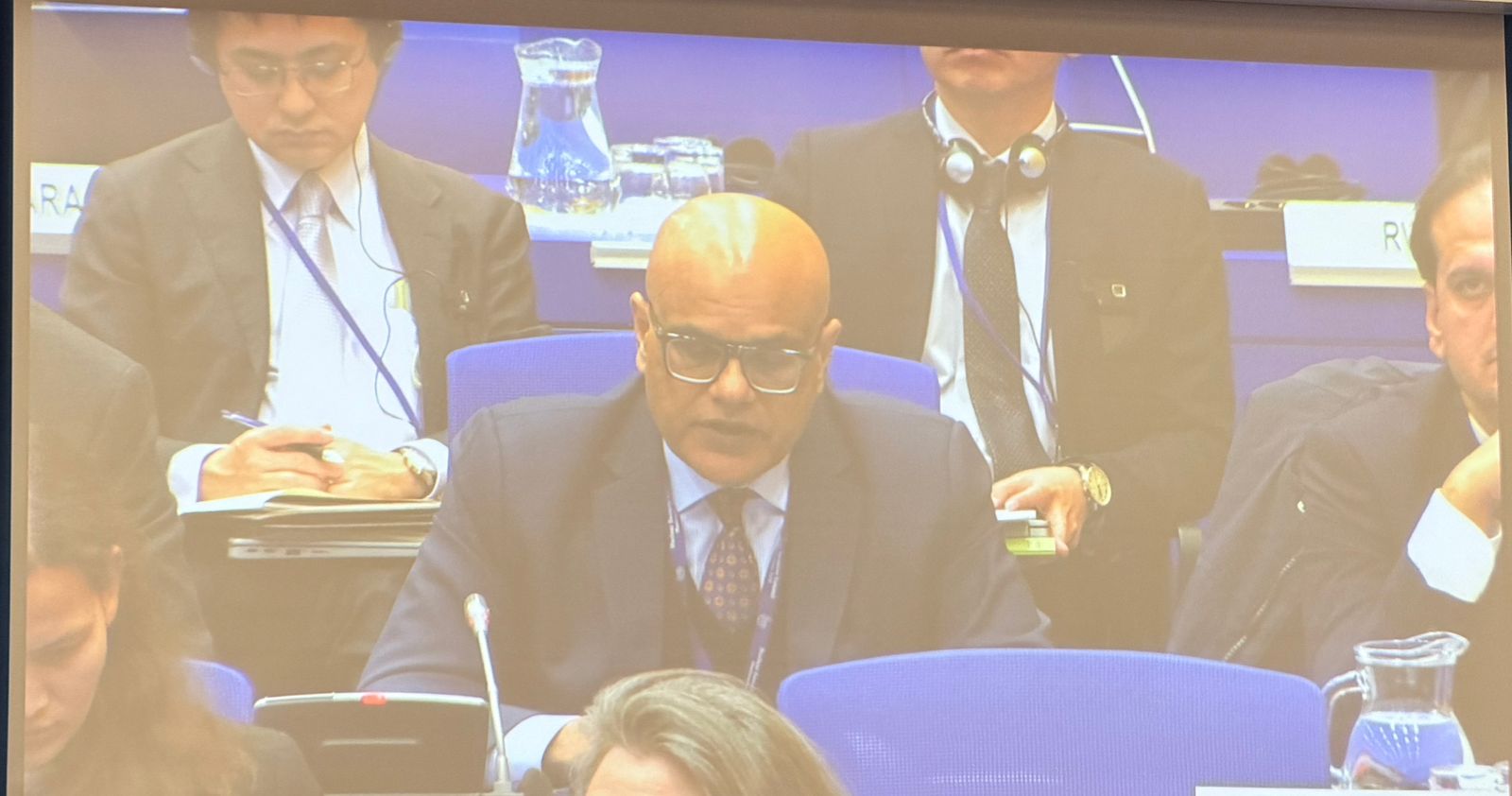
63rd Session of the Scientific and Technical Subcommittee (STSC) of COPUOS
Statement Delivered by the Permanent Representative of Pakistan
Mr. Chair,
At the outset, allow me to congratulate you on assuming the Chairmanship of the 63rd Session of the Scientific and Technical Subcommittee of UN COPUOS. Pakistan also avails itself of this opportunity to express its sincere gratitude to the outgoing Chair, Ms. Ulpia-Elena Botezatu of Romania, for her able stewardship and dedication to advancing the objectives of this body.
Mr. Chair,
Guided by our National Space Policy-2023, Pakistan is harnessing space technology for socio-economic uplift. In this regard, I am pleased to share two significant milestones from the past year. On 31 July 2025, Pakistan launched its fourth Earth Observation satellite, followed shortly by our first Hyperspectral Satellite (HS-1) on 19 October 2025. These assets have revolutionized our national capacity for disaster management, precision agriculture, and environmental monitoring, allowing us to preemptively identify geo-hazard risks.
Mr. Chair,
As a country severely impacted by climate change, Pakistan is prioritizing climate resilience. The national space agency, SUPARCO, in partnership with the National Disaster Risk Management Fund, has developed the region’s first Natural Catastrophe (Nat Cat) Model. This model assesses risks from floods, droughts, and cyclones, enabling the government to prioritize mitigation investments scientifically.
Furthermore, we have successfully completed the Sindh Resilience Project, fortifying disaster management across 27 districts. By operationalizing a Disaster Management Information System and conducting Multi-Hazard Vulnerability Risk Assessments, we have established a scientific baseline for all future disaster reduction interventions in the province.
Mr. Chair,
Air pollution and smog remain a grave concern for Pakistan. Moving beyond basic monitoring, SUPARCO now utilizes Sentinel-5P capabilities to map specific pollutants—including Nitrogen Dioxide, Sulfur Dioxide, and Ozone. Our ground-based analysis confirms that these satellite findings correlate directly with stubble burning and meteorological conditions, providing a robust evidence base for our environmental policies.
Similarly, in the Blue Economy, we are utilizing satellite data to monitor coastline erosion and mangrove ecosystems, while our space agriculture initiatives focused on resilient crop varieties continue to mature through academic and government collaboration.
Mr. Chair,
International cooperation is the bedrock of our program. Under APSCO, Pakistan leads the "GeoTemp-Ex" project on climate resilience. Our bilateral cooperation with China also continues to yield results in space mutagenesis and crop development.
However, as Low-Earth Orbit becomes congested, we stress the need for Space Traffic Management (STM). Pakistan calls for an inclusive, UN-based information-sharing mechanism for STM. We also support the UAE-led Expert Group on Space Situational Awareness.
Mr. Chair,
It is a matter of concern that developing nations are often impeded by discriminatory restrictions. Pakistan firmly maintains that access to outer space technology is an inherent right of all states. We urge this forum to reject selective cooperation and technological denials.
On this note, I must draw attention to the International Committee on GNSS (ICG). Pakistan is actively fostering GNSS adoption in the aviation and maritime sectors. However, our membership for the ICG has been blocked since 2021. Despite the clear technical merits of our application, consensus remains elusive due to the politicization of a technical mandate by one delegation. We remain confident that merit will prevail over political expediency to allow Pakistan’s timely inclusion.
Taking this opportunity, I would like to highlight the need concerning the formulation of Terms of Reference (ToRs) for the STSC Working Group of Whole, which looks after important issues including Sustainable Development and the post-2015 development agenda, global health, and organizational matters. The time has come to define a mechanism, like other Working Groups of COPUOS, for the election of the Chair and other related matters, as this position couldn’t remain with one country for an indefinite period of time.
Mr. Chair,
Pakistan remains an active node in the global space ecosystem. We successfully hosted ICAST-2025 in Islamabad in November 2025 and look forward to hosting an international conference, in collaboration with UNOOSA, on "Early Warning for All" in the first half of 2026 in Islamabad.
I thank you, Mr. Chair.
*******
 Search


 Print
Print