MINISTRY OF FOREIGN AFFAIRS
GOVERNMENT OF PAKISTAN
GOVERNMENT OF PAKISTAN
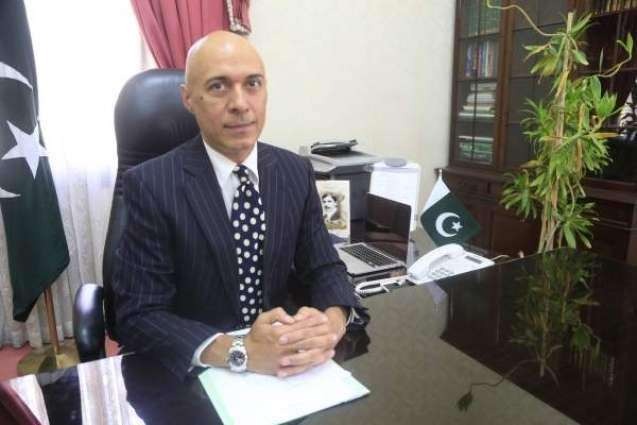
Afghanistan has “fallen into a trap,” and has been used by India to create problems along a border that is very difficult to control, but Pakistan does not want to “get dragged” into a new war after the one last May. This is what Pakistan’s Ambassador to Italy, Ali Javed, tells “Agenzia Nova” when commenting on the clashes that broke out along the Afghan-Pakistani border last weekend, which cost the lives of dozens of soldiers and fighters on both sides.
According to the diplomat, while the conflict last May between India and Pakistan was “a direct war,” to which Islamabad was able to respond “very effectively,” the one underway now would be “an indirect war.” In recent months, Javed claims, India “is spending a lot of money on terrorism, activating armed groups and encouraging them to cross our borders, to commit murders, suicide attacks, or assaults against our army.”
“We are talking,” notes the Ambassador, “about very harsh terrain, rocks as far as the eye can see, where it is easy to shoot and hide.” Along more than 2,600 kilometers of border, families and tribes have lived for thousands of years straddling the two countries. “The border we have today,” the diplomat recalls, “is only 70, 80 years old, but people have been living there for thousands of years, since the time of Alexander the Great, who ventured into this part of the world and had to turn back because his horse was killed in a small city in Pakistan.” According to Javed, this is where Islamabad’s army has recently been “targeted without any provocation.”
“We asked our Afghan brothers not to fall into this trap. We repeatedly asked that Afghan territory not be used by terrorist groups. We have always promoted good neighborly relations, we are even hosting 4 million Afghan refugees for 40 years. This time we decided that we had to respond.”
The Ambassador believes Pakistan’s response was “very well-calibrated, planned and measured.” Over the weekend, Islamabad’s armed forces announced that they had killed more than 200 fighters and taken control of 21 outposts on the other side of the border. “We neutralized some very important targets. We struck only terrorist hideouts, with a very limited incursion in terms of area.” The armed groups behind the incursions denounced by Pakistan, according to Javed, are well-known and “very well equipped, supported and financed.”
“One of them,” he emphasizes, “we call Fitna al Hindustan, where Hindustan means ‘the land of the Hindus.’” Pakistan believes India’s hand is evident. Moreover, “the timing is very strange,” the Ambassador notes, referring to the fact that the clashes broke out exactly while the Foreign Minister of the Taliban government, Amir Khan Muttaqi, was in New Delhi. On that occasion, India announced the upgrading of its diplomatic mission in Kabul from a technical office to an embassy.
“Even when the war between Pakistan and India broke out last May 6,” the Ambassador points out, “the Afghan leadership was in India. Perhaps they did not expect it would end so quickly and with this result. In the following four or five months there were many exchanges at the level of Foreign Ministers, there were meetings in Beijing and China intervened to mediate. Everything was going well. Now, however, I must say with great regret that the Afghan leadership has not shown the wisdom we thought they would have and has fallen into this trap, receiving support from India and causing trouble on our border.” According to Javed, there will not be an escalation.
“We do not want it, we do not want it at all. Pakistan is against all forms of terrorism, and also against all forms of violence. We are a nuclear power, but in our 80-year history,” concludes the Ambassador, “we have never attacked or threatened anyone.”
 Search


 Print
Print