
Embassy Of Pakistan
Washington D.C - USA
Washington D.C - USA
People
Pakistan is a multi-ethnic and multi-cultural society. It continues to have high regard for traditional family values, although urban families have grown into a nuclear family system due to the socio-economic transitions. Recent decades have seen the emergence of a middle class in urban centres, which is increasingly more liberal. Globalization has increased the influence of “Western culture”.
Religion & Beliefs
Islam is the state religion of Pakistan. 95% of the population is Muslim. The minority community includes Hindus, Christians, Parsis, Kalash, Sikhs, Buddhists, and Jews. The Constitution guarantees equal rights to Muslims and non-Muslims.
The country has a strong and rich “Sufi” cultural heritage. The Sufi thought embodies religion, values, literature, education, and mysticism that have created an enduring impact on the presence of Islam in South Asia today. Today, there are thousands of Sufi shrines and mausoleums, which dot the landscape of Pakistan.
Clothing and Fashion
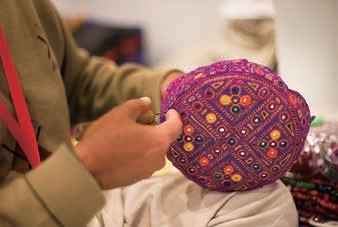
Shalwar-Kameez is the national dress of Pakistan and is worn by both men and women across the country. Each province has its own style of wearing the Shalwar Kameez accompanied by peculiar head dress and jewellery. Pakistanis wear a wide range of clothes from simple to exquisite colors and designs with different types of fabric (silk, chiffon, cotton, etc). Pakistani fashion is a combination of traditional and modern outfits, and it has become the cultural identification of Pakistan. Despite all modern trends, the regional and traditional dresses have developed their own significance as a symbol of native tradition. This regional fashion is not static but evolving into more modern and pure forms. Besides the national dress, domestically tailored suits and neckties are often and usually worn by men in the country. It is customary in offices, schools, and other popular gatherings.
Pakistan’s fashion has historically evolved in different phases and acquired its unique identity. The fashion industry has flourished well in the changing environment of the fashion world. The Pakistan Fashion Design Council, based in Lahore, organizes Fashion Week, and Fashion Pakistan, based in Karachi, organizes fashion shows in that city. Pakistan’s first fashion week was held in November 2009 and is now a regular feature.
Arts and Craft
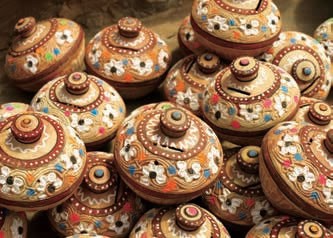
Pottery here is a living history, a traditional craft that became an art, with its origins going back to 3,000 years B.C. Today, each region of Pakistan claims its own special jars and jugs of a variety of colours and patterns. Pottery here is a living history, a traditional craft that became an art, with its origins going back to 3,000 years B.C. Today, each region of Pakistan claims its own special jars and jugs of a variety of colours and patterns. Each of the regions in Pakistan has regional crafts unique to it:
Peshawar and adjoining areas in KPK boast hand-etched copper and brass decorations and housewares with elaborate floral and arabesque patterns. Carved marble fireplaces, tables, decorations, and patterns are well-known. Kashmir has exquisite chain-stitched embroidered fabrics and hand-woven wool shawls.
Lahore has hand-crafted sterling silverware. The cities of Chiniot and Gujrat in Punjab are fabled for their woodwork with copper and iron inlays. The craftsmanship is delicate and exquisite. The thriving industry has attracted many fine woodworkers and wood carvers from all over the country. Multan, in Southern Punjab, specializes in hand-crafted glazed terracotta tiles. Multan has been famous for its tiles for centuries. The table lamps made out of camel skin are a specialty, too. Bahawalpur is famous for elaborately embroidered shoes locally known as Khussas. The province of Balochistan produces fine hand-woven tribal rugs (Kilims). The artisans in the Thar desert and rural Sindh produce Chunarri (a kind of tie-and-dye fabric), Ajraks (elaborately block-printed fabric), and glass bangles.
Festivals
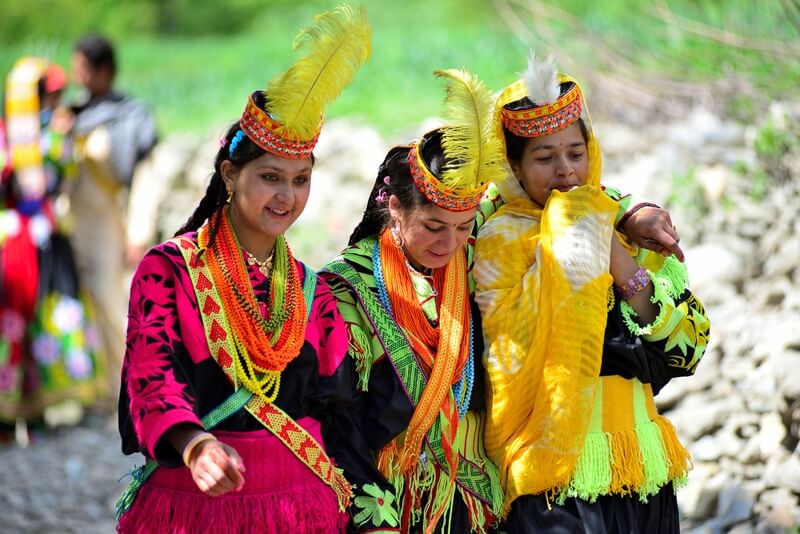 Pakistan is a land of festivals, which are rooted in the diverse and rich culture of the country. The two biggest festivals are Eid-ul- Azha and Eid-ul-Fitr, which have Islamic significance. Eid al-Adha celebrates the sacrifice of the Prophet Abraham and coincides with the annual pilgrimage of Muslims to Mecca. Eid al-Fitr celebrates the end of the holy month of Ramadan.
Spring and harvest seasons are celebrated in the various provinces in their particular tradition. The birthdays of Sufi saints are also celebrated with reverence.
Lok Virsa Festival
“Lok Virsa”, the National Institute of Folk and Traditional Heritage based in Islamabad, organizes a festival every year, bringing the artisans, artists, and the folk culture from all across Pakistan to one place. The festival is a unique opportunity to witness the diverse folk traditions from across the country, along with seeing the local craftsmen in action and tasting cuisine from across Pakistan.
Painters of Pakistan
Pakistan has been blessed with a fair share of talented artists in many different fields, including the art of painting. The works of Pakistani painters like the legendary A. R. Chugtai and Sadequain are among the most acclaimed and recognized around the world.
Besides Chugtai and Sadequain, the old masters include Ustad Allah Buksh, who depicted the rural society of Pakistan and its landscape on the canvas. The new breed of painters has gained acclaim in modern, abstract sculpture and other art forms.
Truck Art
 Truck painting is a popular form of indigenous art in Pakistan and features floral patterns and poetic calligraphy on locomotives, including trucks, buses, and vans. Decoration may include structural changes, paintings, calligraphy, and ornamental decor like mirror work on the front and back of vehicles and wooden carvings on the truck doors. Depictions of various historical scenes and poetic verses is also common.
Music and Media
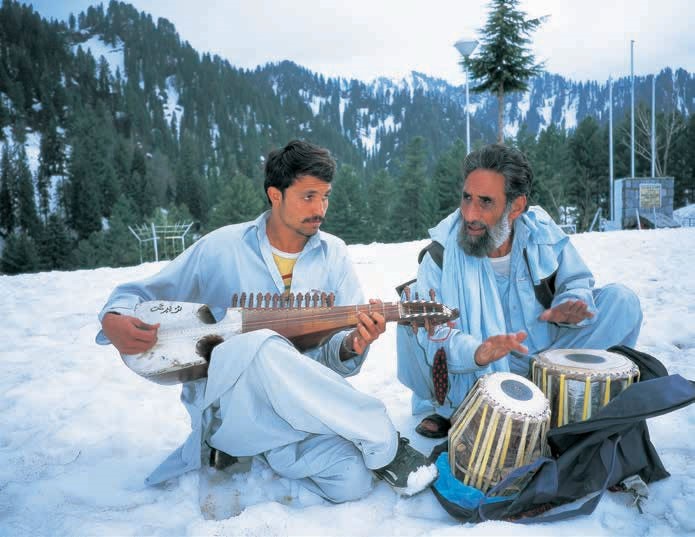
The variety of Pakistani music ranges from diverse provincial folk music and traditional styles such as Qawwali and Ghazal to modern forms fusing traditional and Western music, such as the synchronisation of Qawwali and Western music by the renowned Nusrat Fateh Ali Khan. The new trends in music include a sprouting of popular music bands experimenting with the fusion of rock, rap, pop, folk, and classical genres of music.
Until the 1990s, the state-owned Pakistan Television Corporation (PTV) and Pakistan Broadcasting Corporation were the dominant media outlets. Following the liberalization of the media in the early 2000s, there are now more than 80 private television channels. Various American, European, and Asian television channels and movies are available to the majority of the Pakistani population via cable and satellite television. There are also small indigenous movie industries based in Lahore and Peshawar (often referred to as Lollywood and Pollywood).
Literature and Philosophy
Pakistan has a rich literature in Urdu as well as regional languages. Before the 19th century, the literature consisted mainly of lyric and religious poetry, mystical and folklore works. During the colonial age, the native literary figures influenced by Western literary realism took up increasingly varied topics and narrative forms. Prose fiction is now very popular.
The national poet of Pakistan, Muhammad Iqbal, wrote poetry in Urdu and Persian. He was a strong proponent of the political and spiritual revival of muslims of South Asia. Sufi poets Shah Abdul Latif, Bulleh Shah, Mian Muhammad Bakhsh, and Khawaja Farid are very popular in Pakistan.
Historically, the philosophical development in the country was dominated by the ideas of Muhammad Iqbal, Sir Syed Ahmad, Ghalib, and Muhammad Ali Johar. Analysts such as M.M. Sharif and Zafar Hassan established the first major Pakistani philosophical movement in 1947.
Faiz Ahmed Faiz was an influential left-wing intellectual, revolutionary poet, and one of the most highly regarded poets of the Urdu language. A notable member of the Progressive Writers’ Movement and a Lenin Peace Prize recipient, Faiz has influenced modern Pakistani poetry and thinking.
Influential work by Manzoor Ahmad, John Elia, Hasan Askari Rizvi, and Abdul Khaliq brought the mainstream social, political, and analytical philosophy to the fore of Pakistani philosophical academia.
Architecture
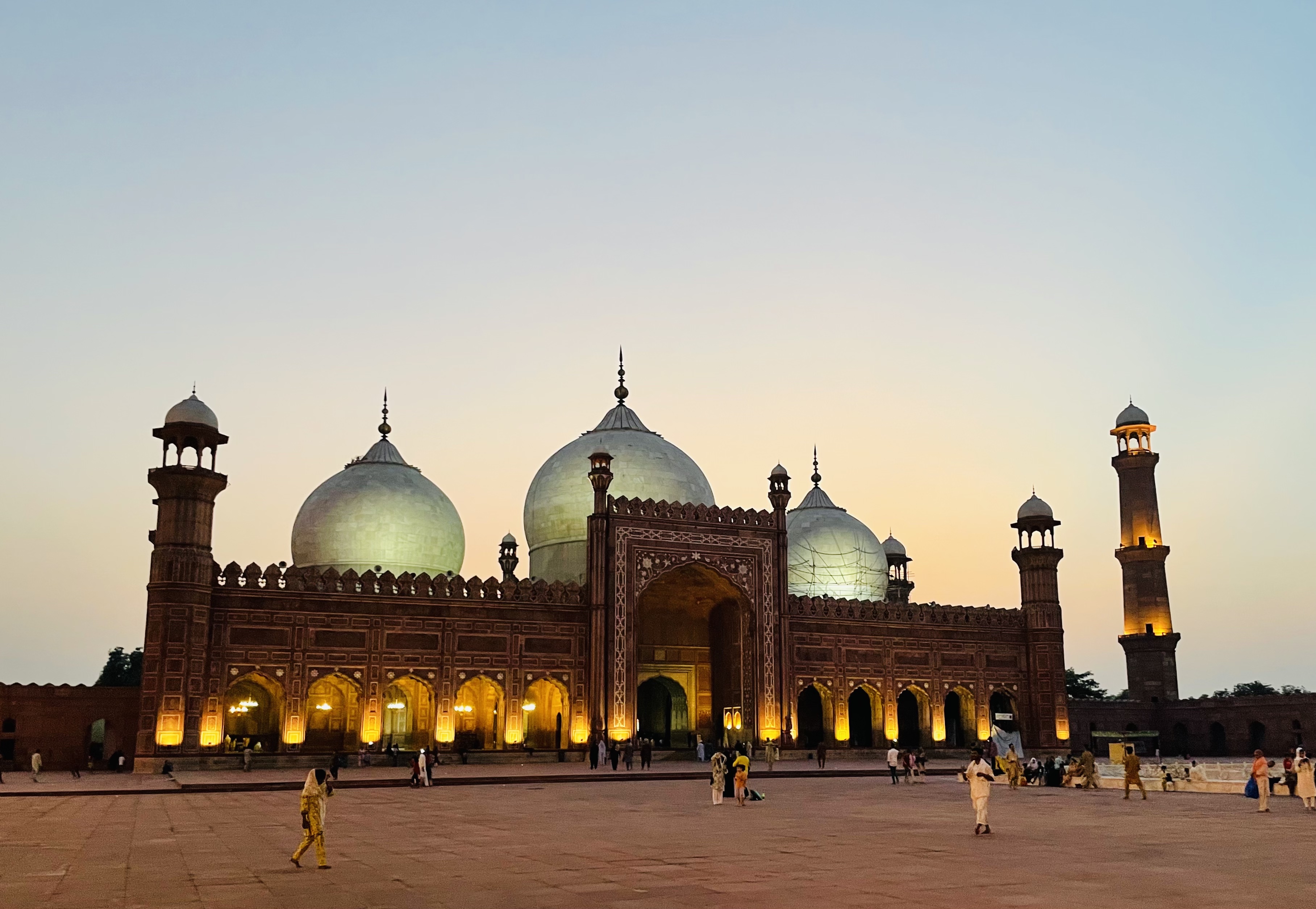 Pakistani architecture has four recognized periods: pre-Islamic, Islamic, colonial, and post-colonial. With the beginning of the Indus civilization around the middle of the 3rd millennium BCE, an advanced urban culture developed for the first time in the region, with large buildings, some of which survive to this day. Mohenjo-Daro, Harappa, and KotDiji are among the pre-Islamic settlements that are now tourist attractions.
The rise of Buddhism and the Persian and Greek influence led to the development of the Greco-Buddhist style, starting from the 1st century CE. The high point of this era was reached at the peak of the Gandhara style. An example of Buddhist architecture is the ruins of the Buddhist monastery Takht-i-Bahi in Khyber Pakhtunkhwa Province.
The arrival of Islam in today’s Pakistan led to a smooth transition to predominantly Islamic architecture. The most important Persian- style building still standing is the tomb of the Shah Rukn-i-Alam in Multan. During the Mughal era, design elements of Persian-Islamic architecture were fused with and often produced playful forms of Hindustani art. Lahore, an occasional residence of Mughal rulers, exhibits many important buildings from the empire. Most prominent among them are the Badshahi mosque, the fortress of Lahore with the famous Alamgiri Gate, the colourful, Persian-style Wazir Khan Mosque, the Shalimar Gardens in Lahore, and the Shahjahan Mosque in Thatta.
In the British colonial period, predominantly functional buildings of the Indo-European representative style developed from a mixture of European and Indian-Islamic components. Post-colonial national identity is expressed in modern structures like the Faisal Mosque, the Minar-e-Pakistan and the Mazar-e-Quaid. Several of the architectural infrastructures have been influenced from the British design, and such architectural designs can be found in Lahore, Peshawar, and Karachi.
Gastronomy and Cuisine
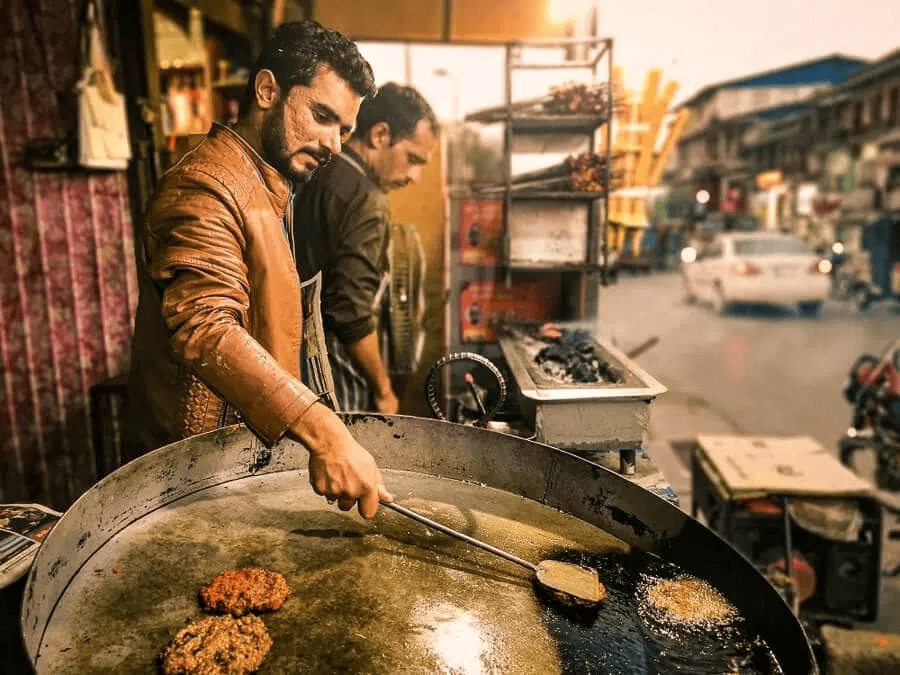 Pakistan has a rich gastronomic culture. Food is prepared with love and is an existential part everyday life. No event is complete without an extensive cuisine. Pakistani cuisine has imbibed various local flavours and tastes and was refined by the royal kitchens of sixteenth-century Mughal emperors.
Pakistan has a large variety of meat dishes compared to the rest of the sub-continent and most of those dishes have their roots in Central Asian, British and Middle Eastern cuisine. Chinese Xinjiang food also has some similarities with meat based Pakistani dishes.
Pakistani cooking uses spices, herbs and seasoning. Garlic, ginger, turmeric, red chilli and garam masala are used in most dishes, and home cooking regularly includes curry.
The staple food includes Chapati (a thin flat bread made from wheat) and rice, served with curry, meat, vegetables, and lentils. Rice is served plain or fried with spices and is also used in sweet dishes. Biryani, haleem, and daal are unique Pakistani dishes that have become popular across the world.
Black tea with milk and sugar is popular throughout Pakistan and is taken daily by most of the population. Lassi is a traditional drink in the Punjab and the rural Sindh region.
Sweets are an essential element of Pakistani culture. No wedding or celebration is complete without the distribution of sweets.
Sports
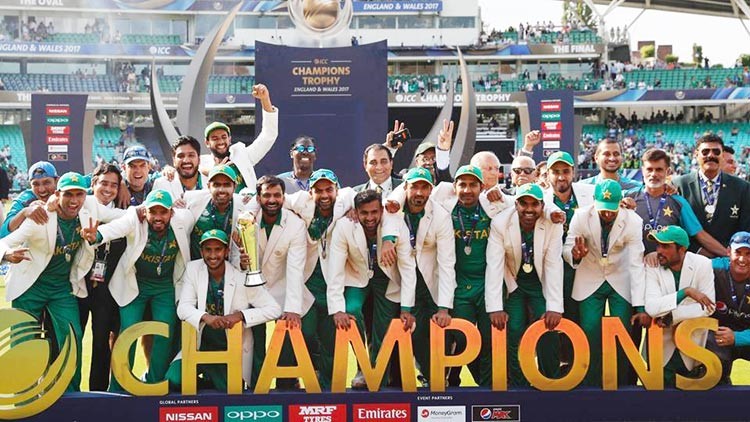
Field hockey is the national sport of Pakistan. Pakistani hockey team is one of the top teams in the world. It has won many international hockey tournaments, including the World Cup, Olympics, and the Champions Trophy.
Cricket is the most popular sport in Pakistan. The Pakistan Cricket team is a test-playing nation – a status enjoyed by only ten nations in the world. The Cricket team has won many accolades, including the World Cup and the ICC T20 World Cup. Pakistan Women's Cricket Team won gold medals in the Asian Games in 2010 and 214.
Other popular sports in Pakistan include squash, badminton, tennis, volleyball, football, and snooker. In the plains of Punjab and Sindh, the young also indulge in local sports like kabaddi and wrestling.
The World’s highest Polo Grounds - Shandur Polo Festival
The favourite sport in the Gilgit-Baltistan region is polo, which local folks claim originated here. It is a more rugged, free-style version than the sedate variety known in the plains. Polo is an equestrian sport with its origin embedded in Central Asia, Persia, Tibet, China, and Japan.
The most famous tournament in Pakistan is held on Shandur Pass, the highest polo ground in the world. Every year, Shandur invites international visitors to experience a traditional polo tournament between the teams of Chitral and Gilgit from 7th to 9th July. The festival includes folk music and dancing and a camping village is set up.
 Search


 Print
Print